The KTEL System Explained Simply
If you’re traveling in Greece without a rental car, you’ll need to rely on buses – and they work better than many people think.
The bus network in Greece is extensive, reliable, and affordable. Whether you want to travel from Athens to Delphi, from Heraklion to Chania, or from the capital to the beaches on Naxos – you can get almost anywhere by KTEL bus.
This article tells you everything you need to know about the KTEL system, including the main routes, fares, timetables, tickets, and travel tips. We’ll also explain how to find buses on the Greek islands and what to look out for.
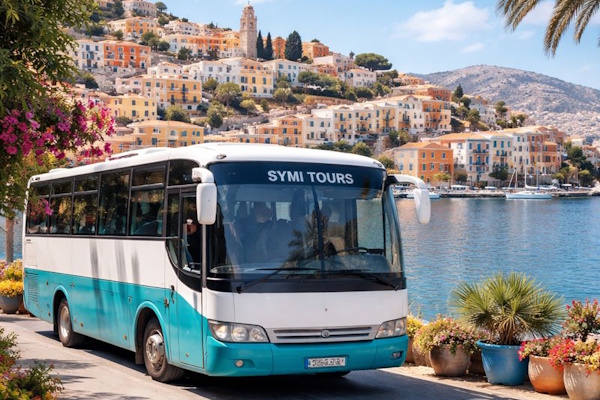
1. What is the KTEL System?
KTEL stands for “Koino Tamio Eispraxeon Leoforeion” – roughly translated as “Joint Bus Service.”
The system was created in the 1950s to organize local and long-distance transportation in Greece.
Each region of the country has its own KTEL bus service, which operates independently but follows the same basic principles.
This means that there isn’t one large national bus company, but rather many regional companies that cooperate with each other.
Examples:
KTEL Attikis – Athens Region
KTEL Thessalonikis – Northern Greece
KTEL Crete (Chania – Rethymno / Heraklion – Lasithi)
KTEL Naxos, KTEL Santorini, KTEL Rhodes, etc.
On the islands, the organization is usually more manageable – often there’s only one bus company with 5 to 10 routes connecting all the major destinations.
Book accommodation in Greece now
Our tip
For hotels in Greece, the best option is Booking.com: a wide selection from guesthouses to resorts, genuine guest reviews, flexible (often free) cancellation, and fair prices.
2. How the bus network works in Greece
The KTEL system covers almost all cities and islands accessible by road.
The buses run regularly, are punctual, and are mostly air-conditioned.
Typical routes:
Athens – Delphi – Lamia – Thessaloniki
Athens – Nafplio – Sparta – Kalamata
Heraklion – Rethymno – Chania (Crete)
Corfu Town – Paleokastritsa – Kavos
Naxos Town – Agios Prokopios – Agia Anna – Plaka
Depending on the region, there are city buses, regional lines, and long-distance buses:
City buses: short routes in Athens, Thessaloniki, Heraklion, etc.
Regional KTEL buses: connect villages, beaches, and neighboring towns
Long-distance buses: longer routes between major cities or regions
3. KTEL Long-Distance Buses on the Mainland
On the Greek mainland, KTEL buses are the primary form of public transportation.
Trains are only available on a few routes (e.g., Athens–Thessaloniki).
For all other routes, the bus is the best option.
The main long-distance bus hubs:
Athens (KTEL Kifissos & KTEL Liosion)
Buses depart from here to almost all parts of the country.
Kifissos: Peloponnese, Western Greece, and Crete connections
Liosion: Central and Northern Greece
Thessaloniki: Central hub for Northern Greece
Patras: Connections to Athens, Olympia, and the Ionian Islands
Ioannina: Starting point for Epirus and the Albanian border
You can buy tickets directly at the counter, book online, or pay the driver (for short trips).
4. Buses on the Islands
Buses run regularly on almost all the larger islands – they are ideal for travelers without a rental car.
Timetables vary considerably depending on the season: from May to October, there are significantly more connections than in winter.
Examples:
Crete
Two bus companies:
KTEL Chania – Rethymno (Western Crete)
KTEL Heraklion – Lasithi (Eastern Crete)
Routes: Heraklion – Chania, Rethymno, Matala, Agios Nikolaos, Elounda
Fare: approx. €5–15 each way
Buses are very reliable, good air conditioning, Wi-Fi on board
Rhodes
Routes from Rhodes Town to Faliraki, Lindos, Prasonisi, and the airport
Frequent service in summer, tickets available from the driver or at the bus station
Prices: €3–6
Naxos
KTEL Naxos: Routes from Naxos Town to beaches (Agia Anna, Plaka, Mikri Vigla)
Very popular with tourists
Tickets are available at kiosks, bus stations, or directly on the bus
Santorini
Buses connect Fira with Oia and Perissa Kamari, Akrotiri
Good frequency, but often crowded in high season
Prices: €2–3
Corfu
Two systems:
Blue Buses (city area)
Green Buses (region & villages)
Connection e.g. Corfu Town – Paleokastritsa – Kavos
5. Tickets & Prices
Where to buy?
At KTEL terminals (with seating, restrooms, and cafes)
At kiosks or small ticket counters
Online on the respective KTEL region’s website
Or simply from the driver – especially common on islands
Prices
Bus travel in Greece is very inexpensive.
Examples (as of 2026, average values):
| Route | distance | Price (approx.) |
|---|---|---|
| Athens – Delphi | 180 km | 15 € |
| Athens – Nafplio | 140 km | 12 € |
| Heraklion – Chania | 160 km | 15 € |
| Naxos Town – Plaka Beach | 10 km | 2 € |
| Rhodes Town – Lindos | 50 km | 5 € |
Children and students often receive discounts.
6. Timetables and Frequency
Timetables vary depending on the season.
In summer, buses run much more frequently – especially on tourist routes.
Example:
Naxos Town – Agia Anna: every 30 minutes in July/August
Rhodes Town – Lindos: hourly
Heraklion – Chania: every 1–2 hours
In winter, some routes may only run 2–3 times per day.
Up-to-date timetables are posted at all bus stops or available online (in English or Greek).
7. Comfort & Amenities
KTEL buses are more modern than many expect.
Most vehicles are air-conditioned, many have comfortable seats and Wi-Fi.
Long-distance buses often have USB ports, luggage storage, and a restroom.
On islands, the buses are somewhat smaller, but also clean and well-maintained.
Boarding is only permitted with a valid ticket, and everyone has an assigned seat.
8. Tips for Bus Travel in Greece
Arrive at the bus stop early – buses fill up quickly, especially in summer.
Have small change ready if you’re paying the driver.
Take a photo of the timetable – schedules can change spontaneously on small islands.
Book early during peak season, especially on Crete, Santorini, or Naxos.
Leave your luggage in the passenger compartment, not on the overhead rack – it will be returned to you when you get off.
Be aware of rest stops: Long journeys often include a 10-minute break at rest areas.
Check online: Many KTEL websites offer online timetables and bookings.
9. Bus Travel in Athens & Thessaloniki
Athens
City buses are operated by OASA.
Ticket price: €1.20 (valid for 90 minutes, also valid for the metro and tram).
Buses run regularly during the day, but service is limited at night.
Tickets are available from machines, kiosks, or via the app.
Thessaloniki
City buses via OASTH.
Tickets available from machines on the bus or in shops.
Flat fare: approx. €1.
Many lines run until midnight.
Tip: If you’re only staying in Athens or Thessaloniki, the Athens Transport Card or Thessaloniki City Card for bus & metro is a good option.
10. Combining Buses & Ferries
A major advantage of the KTEL system:
Many bus lines connect directly to ferry ports.
Examples:
Athens (KTEL Kifissos) → Port of Piraeus
Heraklion City Center → Heraklion Ferry Port
Corfu Town → Lefkimmi Port
Rhodes Town → Mandraki Port
This makes island hopping easy:
Bus → Ferry → Bus on the next island.
This makes public transport in Greece surprisingly efficient – especially if you don’t want to rent a car.
11. Frequently Asked Questions
How punctual are buses in Greece?
Generally very punctual, especially long-distance buses. On islands, there may be slight delays during peak season.
Do I need to make a reservation?
On long routes, yes; on islands, usually not – buying a ticket shortly before departure is sufficient.
Can I bring luggage?
Yes, one suitcase and one piece of hand luggage are free.
Are there any discounts?
Students and children often travel at a reduced fare – bring your ID.
Can I pay by card?
In larger cities, yes; otherwise, it’s best to have cash on hand.
12. Advantages of Bus Travel in Greece
Affordable and environmentally friendly
Excellent coverage, even in smaller towns
No need to search for parking or pay tolls
Opportunities to connect with locals and other travelers
Ideal for solo travelers or backpackers
13. Disadvantages
Schedules vary depending on the season
Some places are difficult to reach (e.g., remote beaches)
On small islands, there are often only a few trips per day
Buses can be overcrowded during peak season
14. Conclusion
The KTEL bus system in Greece is a real insider tip for anyone who wants to travel affordably and flexibly.
Whether on the mainland or the islands, the buses are reliable, air-conditioned, and connect almost every location in the country.
If you don’t want to rent a car, you can easily get around using the KTEL buses.
They are safe, affordable, and significantly better organized than many travelers expect.
With a combination of bus and ferry travel, you can explore all of Greece—even without a rental car.
Ideal for backpackers, couples, or families who want to travel comfortably and affordably.