🐢 Sea Turtles & Land Tortoises
Turtles are among the most fascinating animals in Greece.
Those vacationing on the beaches of the Ionian Islands during the summer months have a good chance of seeing sea turtles – especially on Zakynthos.
But various land tortoise species also live inland, perfectly adapted to the warm, dry climate.
In this article, you’ll learn everything about the turtles of Greece – where they live, which species exist, and how you can observe them responsibly.
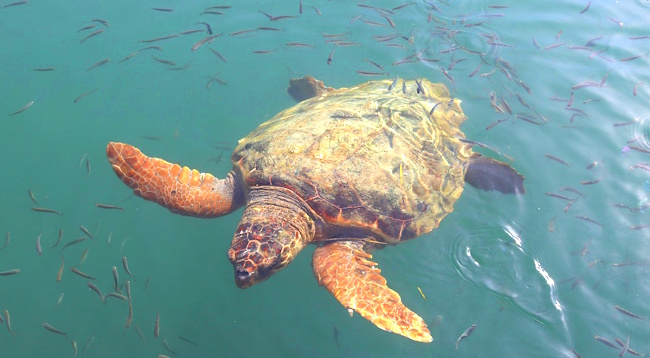
🌊 Sea Turtles in Greece
The most well-known turtle species in Greece is probably the loggerhead sea turtle (Caretta caretta).
It is the emblem of the island of Zakynthos and is strictly protected. We have published a separate article about turtles on Zakynthos.
🐢 Loggerhead Sea Turtle (Caretta caretta)
This turtle is the only sea turtle species that regularly nests in Greece.
It lives throughout the Mediterranean Sea, but the largest population in Europe is found in Laganas Bay on Zakynthos.
Characteristics:
Carapace length up to 90 cm
Weight: 80–100 kg
Color: reddish-brown, lighter belly
Food: Jellyfish, small fish, crustaceans, snails
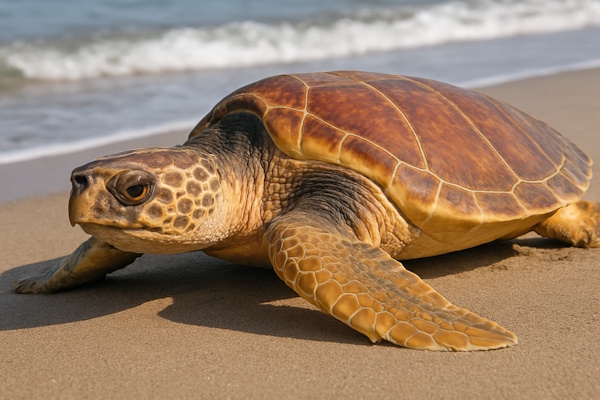
🏖️ Breeding grounds in Greece
The female turtles return every summer to the beach where they themselves hatched.
Between May and August, they dig their nests in the warm sand at night.
After about 60 days, the young hatch and embark on the perilous journey to the sea.
Important nesting areas:
| Island / Region | Location | Special feature |
|---|---|---|
| Zakynthos | Laganas Bay, Kalamaki, Gerakas | largest breeding ground in the Mediterranean |
| Peloponnes | Kyparissia Bay | second large breeding area |
| Crete | Rethymno, Chania, Messara Bay | smaller colonies |
| Kefalonia | Skala & Mounda Bay | several nests per year |
| Rhodes | East coast near Faliraki | rare, isolated sightings |
⚠️ Protective measures
Sea turtles are strictly protected.
The Zakynthos National Marine Park was established in Laganas Bay in 1999 – Greece’s first marine protected area.
Strict rules apply here:
No entering the beaches at night
No sun loungers or parasols in nesting areas
No boats in the marked restricted zones
Quiet behavior and no lights during the nesting season
Despite these protective measures, many young turtles die every year – due to light pollution, tourism, and plastic waste.
🌅 Watching turtles – but doing it right
Many tourists want to see turtles in their natural habitat – this is possible, but only with respect.
💡 Tips for observing turtles:
Best time is early morning or late afternoon
Maintain a minimum distance of 10 meters
Do not chase or touch them
No flash photography or loud noises
Only use certified boats (e.g., Laganas Turtle Spotting Tours)
Reputable operators keep their distance and turn off the engine when a turtle appears.
🚤 Boat trips to see turtles
Boat tours to see loggerhead sea turtles (Caretta caretta) depart daily, especially from Laganas Bay (Zakynthos).
The chances are good – you’ll usually see several turtles in a short time.
Tip:
Look for operators with an official National Marine Park logo.
They guarantee animal-friendly tours.
🏝️ Other places to see turtles in Greece
Besides Zakynthos, there are other regions where sea turtles are found – although they nest there less frequently.
| Location | Art | Notes |
|---|---|---|
| Crete (Rethymno, Chania) | Caretta caretta | Nests on protected beaches |
| Peloponnese (Kalo Nero, Kyparissia) | Caretta caretta | large, sparsely populated sandy beaches |
| Kefalonia | Caretta caretta | Animals are frequently found in the port of Argostoli |
| Athen / Glyfada | Caretta caretta | Sightings in summer, but no nests. |
🐢 Land tortoises in Greece
Not only in the sea, but also on land, Greece is home to many tortoise species.
Three well-known tortoise species live in the mountains, fields, and olive groves, and are particularly active in spring.
🟤 Greek Tortoise (Testudo graeca)
Light brown shell with dark spots
Length: up to 25 cm
Found on the mainland, in northern Greece, and on the Peloponnese
Prefers dry meadows and slopes
It is the most well-known species and the namesake of the country.
🟢 Marginated Tortoise (Testudo marginata)
Largest European tortoise (up to 35 cm)
Dark, elongated shell with a light border
Particularly common on the Peloponnese
Lives in dry olive groves and on mountain slopes
🟡 Hermann’s tortoise (Testudo hermanni)
Smaller species (up to 20 cm)
Bright yellow shell markings
Common in the north and on islands like Corfu or Thasos
Very shy, but often found near paths
🐣 Lifestyle & Behavior
Tortoises are diurnal and cold-blooded.
They feed exclusively on plants: grasses, herbs, leaves, and flowers.
In summer, they are active in the early morning and evening, retreating to the shade at midday.
In winter, they hibernate for several months, usually from November to March.
⚠️ Threats & Conservation
Both sea turtles and tortoises are threatened by human activities.
Main problems:
Loss of habitat due to development
Traffic (many tortoises are run over)
Pets (especially dogs)
Illegal keeping of animals
Plastic waste in the sea
In Greece, there are several organizations that protect turtles:
Archelon – The Sea Turtle Protection Society of Greece
Zakynthos National Marine Park
WWF Greece
🐢 Turtle Rescue & Sanctuaries
If you find an injured turtle, please do not attempt to care for it yourself, but contact a specialist organization.
In Athens, Archelon operates a large sanctuary where injured sea turtles are cared for and later released.
📍 Sea Turtle Rescue Centre (Archelon)
Related Articles
Squid in Greece
🧭 Conclusion: Turtles in Greece – Experiencing Nature Responsibly
Turtles are an integral part of Greek wildlife – from the sea to the mountains.
Those who travel with their eyes open will see them – on the beach, in the water, or in a meadow.
However, respect and consideration are crucial so that these ancient animals can continue to thrive in Greece.
Whether it’s the loggerhead sea turtle (Caretta caretta) on Zakynthos or the marginated tortoise in the olive grove – every encounter is a small miracle of nature.
Animals in Greece – all our pages